

Outdoor play for kids is an essential part of growing up, but not every neighborhood makes it easy to get outside. The design of a community, from its trails to its open space, can shape how much active play kids actually get during the week, and that’s worth keeping in mind when choosing where to live.
From unstructured play to how kids need different types of outdoor spaces as they grow, this guide looks at what makes a neighborhood work for active kids, and how Treeline by Hillwood in Justin, TX was built with exactly that kind of design in mind.
Why Outdoor Play Matters for Childhood Development
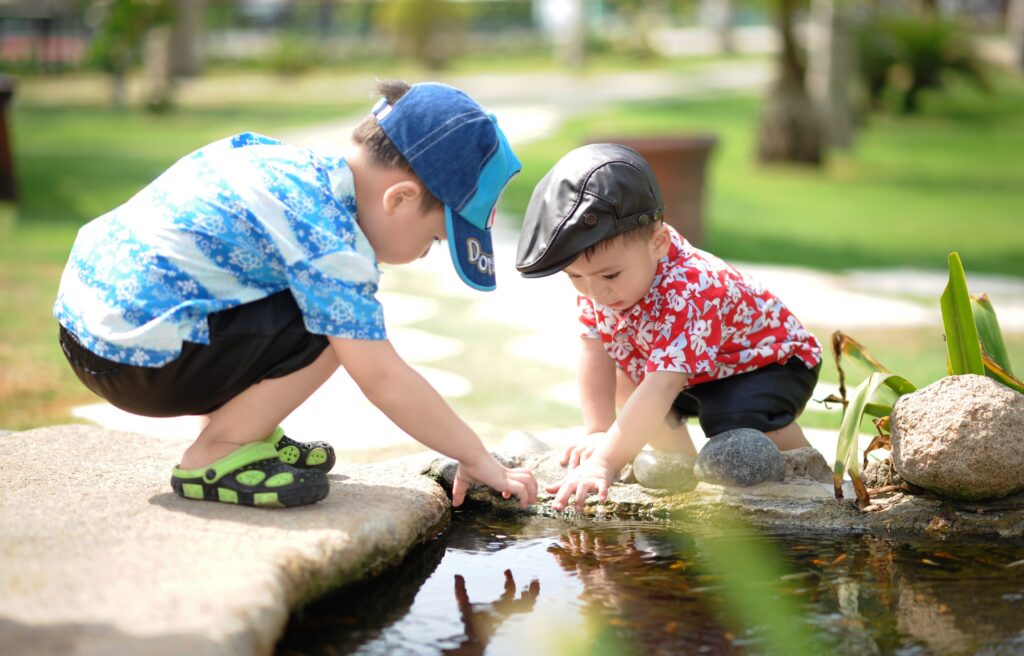
The benefits of outdoor play for kids go well beyond burning off energy. Time spent outside supports physical growth, sharpens problem-solving skills, and gives kids practice interacting with other children without an adult managing every step. Running, climbing, and balancing build coordination and strength in ways that are hard to copy indoors.
Outdoor time also offers a natural break from screens. When kids have an inviting yard, park, or trail nearby, going outside becomes the easy choice. That small shift, over weeks and months, adds up to a more active routine.
The Value of Unstructured Outdoor Play
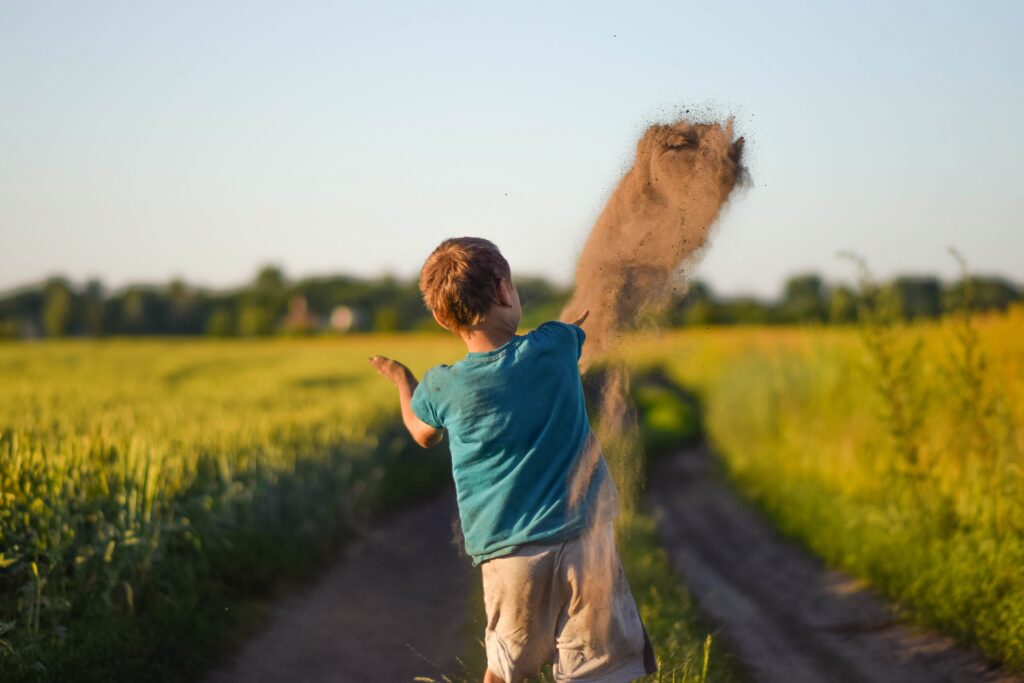
Not all outdoor time looks the same. Unstructured outdoor play means time without a coach, a rulebook, or a set schedule. Kids decide what to do and how to do it, whether that’s building a fort, climbing a tree, or inventing a new game on the spot.
This kind of open-ended play builds creativity and independence. Without an adult directing every move, kids learn to solve small problems on their own, work things out with friends, and adjust when something doesn’t go as expected. Structured sports and activities have their place, but unstructured outdoor play gives kids something different: the freedom to lead.
Nature Play for Children: A Different Kind of Outdoor Fun

Nature play for children means exploring creeks, woods, and fields instead of sticking to set play structures. Digging in soil, climbing a low branch, or watching bugs crawl through the grass gives kids a different kind of stimulation than a slide or a swing set offers.
Natural spaces also tend to hold a kid’s attention longer. A creek bank, a wooded trail, or a grassy meadow changes with the seasons and the weather, giving kids something new to notice each time. That variety is part of what makes nature play so valuable for children.
How Outdoor Play Changes as Kids Grow
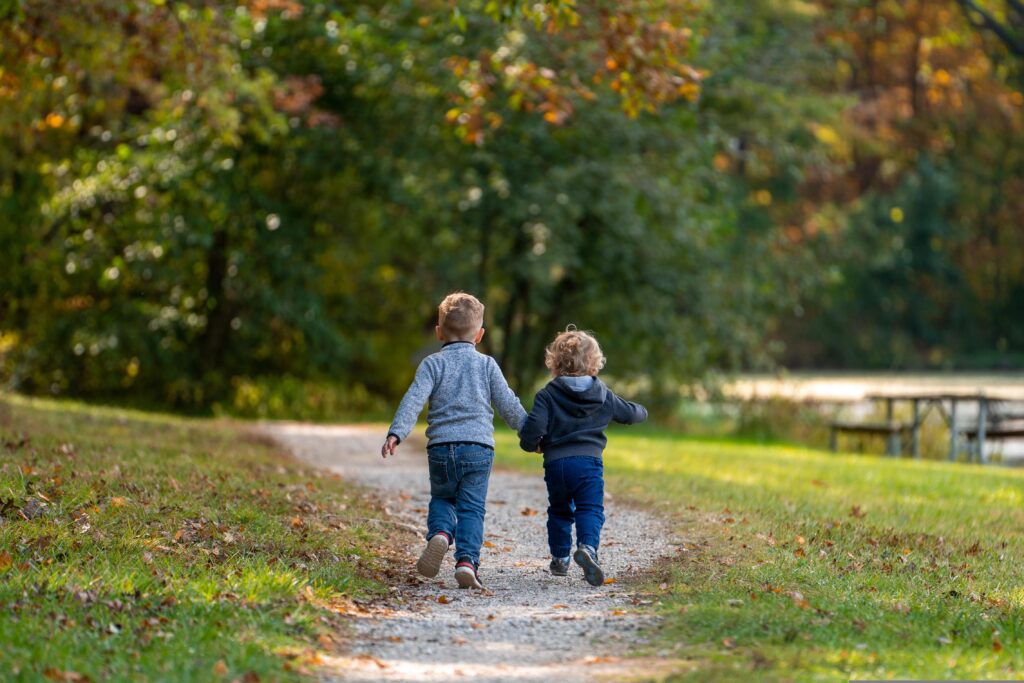
Active, outdoor play looks different at every age. A neighborhood that serves families well should offer more than one type of outdoor space.
Toddlers and Preschoolers
Younger kids benefit most from open, low-stakes spaces where they can toddle, dig, and touch things at their own pace. The benefits of outdoor play in early childhood show up in balance, motor skills, and simple sensory exploration, all of which a soft lawn or a shaded path can support well.
School-Age Kids
Once kids reach school age, they start looking for a bit more challenge and social interaction. Climbing structures, open fields for group games, and trails they can bike or scooter along all give this age group room to test their skills.
Tweens and Teens
Older kids often want more independence, whether that means a longer trail loop, a place to gather with friends, or something physical enough to hold their interest without adult direction. Communities that plan for this age range tend to include larger green spaces or multipurpose areas.
Building an Active Lifestyle for Kids in North Texas

An active lifestyle for kids doesn’t happen by accident. It’s easier to build when a neighborhood’s layout puts trails, parks, and open spaces within easy reach. When that kind of space sits right in the community, kids want to spend more time outside, and parents are comfortable saying yes since it’s all close to home.
Walkable streets, connected trails, and nearby green spaces all lower the barrier to outdoor time. Families across North Texas, including those moving to North Fort Worth and the surrounding area, increasingly look for this kind of layout when choosing where to live. A neighborhood built with movement in mind can turn outdoor play into part of daily life instead of something that has to be scheduled.
Outdoor Play at Treeline by Hillwood
Treeline by Hillwood, a new home community in Justin, Texas, is designed with outdoor living in mind. Situated on 800+ acres featuring multiple treelines of mature oaks alongside a flowing creek, the community includes unique amenities and park spaces that offer something for each stage of childhood and beyond.
Twig Park
Twig Park is a playground built just for the littlest kids, giving toddlers and preschoolers a space scaled to their size, without older kids and faster-paced games crowding them out.
The Treehouse
Part of the Hideaway amenity center, the Treehouse offers both indoor and outdoor play, with a game lawn just outside where kids can spread out after exploring the multi-level games inside. The games get more challenging on each level, so younger kids can play on the lower floors while older kids climb higher to find a bigger physical and mental challenge.
Pickleball Courts
Also part of the Hideaway amenity center, Treeline’s pickleball courts give kids and adults an easy way to stay active together outdoors, with a game simple enough for younger players to pick up quickly.
Retreat Pool
The Retreat Pool rounds out the Hideaway amenity center with a resort-style pool where families can cool off and spend time outside together, especially during the warmer months.
The Nook
The Nook offers a different kind of treehouse experience, with a library setting and swings, chairs, a slide, and more. It’s built to work for kids and adults alike, making it an easy spot for the whole family to unwind together outdoors.
The Grove
The Grove pairs an open lawn with a working orchard, giving kids two very different reasons to spend time there. On any given day, the lawn is open for a pickup game of tag, soccer, or football. Throughout the year, The Grove also hosts seasonal harvest events, where families can pick fruits as each crop comes into season, giving younger and older kids alike a hands-on activity tied to the rhythm of the seasons.
The Lookout
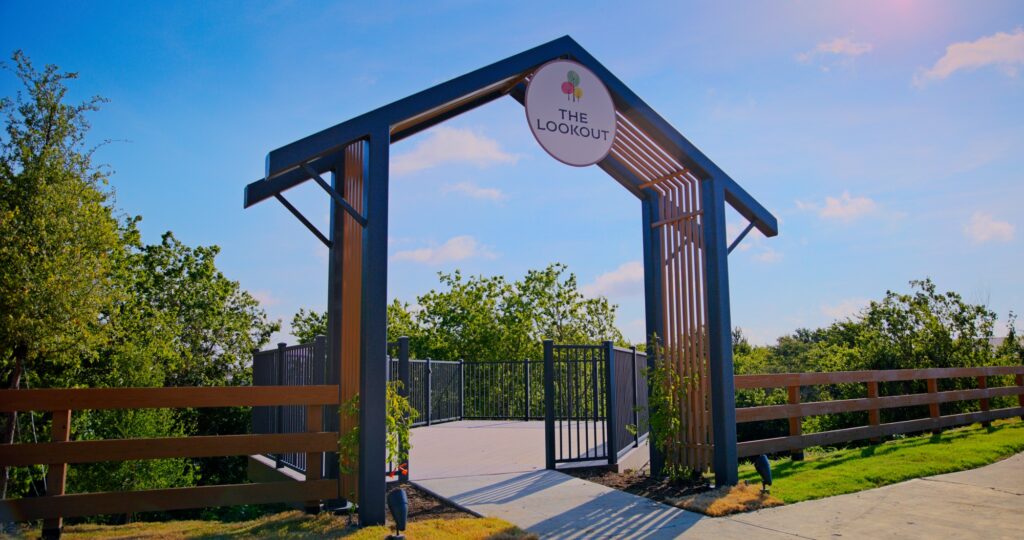
The Lookout sits on a raised platform above Trail Creek, giving kids and families a view of the water and trees from up in the treetops. Built-in seating makes it an easy spot for the whole family to sit and take in the view.
The Bridge
The Bridge trail offers a way to explore the areas in and around Trail Creek, giving families and older kids a chance to venture a bit farther from home and take in more of the natural space that runs through the community.
Sky Park
Sky Park rounds out the community’s outdoor offerings with two different reasons to look up. During the day, it’s a spot for cloud spotting, and in the evening, it’s used for stargazing. Both activities work well across a wide age range, giving toddlers, school-age kids, and teens alike a shared outdoor activity.
FAQs about Outdoor Play for Children
What is nature play and how is it different from regular playground time?
Nature play means exploring creeks, pastures, and trees, giving kids another way to shape their own unstructured play with whatever they find outside. It offers more variety because natural spaces change with the seasons and weather, giving kids new things to notice and do each time they go outside.
How does a neighborhood’s design affect how active kids are?
Neighborhood design shapes daily habits based on how easy it is to access outdoor spaces. Communities that put walking paths, parks, and shared green spaces close to home give kids more chances to experience the majesty of nature without needing a planned outing, which tends to lead to more time spent active outdoors.
Why do kids play differently outside than indoors?
Outdoor spaces give kids more room to move, more sensory input from natural elements like grass, soil, and water, and fewer set rules about how to use the space. Indoor play is often shaped by room size or the toys on hand, while outdoor play adapts to whatever the kid finds outside.
Do walkable neighborhoods encourage more outdoor play?
Yes. When walking paths, parks, and open green spaces are close to home, kids and families are more likely to head outside regularly. Walkability removes a lot of the friction that keeps outdoor play from becoming part of a normal day.
What amenities help kids stay active in a new home community?
Trails, open fields, playgrounds, and shared green spaces support active play and reflect many benefits of outdoor play for children, like better coordination and more time away from screens. Neighborhoods that offer a mix of these community amenities, rather than just one type of space, tend to serve a wider range of ages and interests.
How can families in North Texas find neighborhoods with more outdoor space?
Families can look for new home communities that include trails, parks, and green spaces in their design, instead of treating outdoor amenities as an afterthought. Touring a neighborhood in person, or reviewing its site plan, is often the best way to see how much outdoor space is actually built in.
Find Your Fit at Treeline by Hillwood in North Fort Worth
Treeline was designed with an outdoor lifestyle in mind, giving families in North Fort Worth more reasons to spend time outside together every day. And our abundant amenities make it easy for residents of all ages to stay active outdoors. Browse for your new home online using our homefinder tool, then plan a visit to see the community for yourself. Our 8 builders have homes available now, and many are offering incentives. Come by Treeline by Hillwood in Justin, TX and tour our builders’ model homes today!